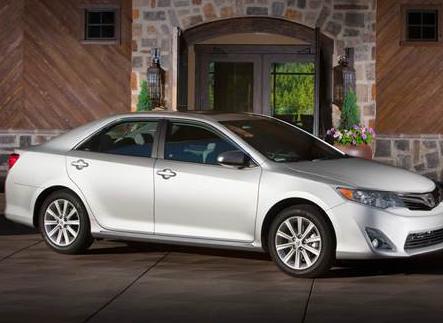
Last February I wrote that the concern about uncontrollable acceleration in Toyota cars was just so much humbug. As the findings on the government investigation into these allegations proved, I was proven correct. What I would prefer, however, is that the media would take the time to report a story accurately rather than just stir up a public frenzy in pursuit of ratings.
It was 11 months ago when CBS Evening News anchor Katie Couric opened her broadcast with the story of Jim Sikes. Just that afternoon the California real estate agent claimed to have lost control of his Toyota Prius, shooting up to 94 miles an hour during a harrowing ride while telling the 911 operator he was standing on the brake pedal.
Over all the more important things in the world available to cover that night, an alleged runaway Prius made the top of Couric's list. One would assume she and her producers chose that story because they saw it as only the latest example of what seemed to be a growing threat to millions of American drivers. (Toyota, then as now, is the world's No. 1 automaker.)
In reality, thanks to Katie Couric, it was proof positive that the whole Toyota unintended acceleration story had become a media farce. Within days Mr. Sike's contentions were discovered to be fraudulent. In fact, Jalopnik later reported that Sikes was facing serious financial difficulties and speculation was that he had told his story in order to obtain a large settlement.
A problem of floor mats
CBS News would take almost another year to do the next major story about Toyota's problems. Even then, the network that was once home to Edward R. Murrow still didn't have his grasp of getting it told accurately. On Feb. 8, CBS correspondent Sandra Hughes reported that the 11-month investigation by the National Highway Traffic Safety Administration — working with NASA — ruled out electronic defects as a cause of "Toyota Deaths."
Businessweek: The Toyota Witch Hunt
Yes, Toyota's electronic systems were proven not to be the cause of any problem or fatality. The culprit was floor mats incorrectly installed, either by the dealership or by the Toyota and Lexus models' owners, that were catching and holding the gas pedal in place. Also, some vehicles had sticky accelerators. And as Transportation Secretary Ray LaHood suggested, the majority of cases were those of "pedal misapplication."
LaHood refused to call it driver error, but in fact it was. After all, brakes always override the throttle, with or without the new nonsense of "brake override systems coded into the system software."
Keeping the story alive
Hughes still wasn't willing to let the Toyota story go totally. She played part of Mark Saylor's frantic 911 call, just before the California Highway patrolman and three members of his family were killed in a loaner Lexus ES 350 going 100 mph. Hughes withheld from the audience the fact that that case was now closed. The loaner was found to have had floor mats for a Lexus RX SUV installed instead.
Moreover, Hughes then suggested that the unintended acceleration story was not over just yet: The National Academy of Sciences, she promised, was doing a far more comprehensive study of unintended acceleration that could "shed more light on potential electronics problems."
Finally, she did not clarify that the broad-based study covers all manufacturers, not just Toyota products. That would have removed much of the suspense.
Here's my prediction: The NAS study will come to the same conclusions as the NHTSA study. Unintended acceleration has been complained about and studied for decades, and the conclusions are always the same. This is why: Some people freeze up mentally instead of physically when they panic; they honestly believe they are slamming on the brakes when in fact it is the gas pedal they're flooring.
Scare tactics
CBS and both got quotes from "safety crusader" Sean Kane of Safety Research and Strategies. Readers will remember him as one of the first to testify in the congressional hearings last year, having brought Rhonda Smith and her husband from Tennessee to tell her harrowing story of a runaway Lexus. Kane also brought David Gilbert of Southern Illinois University, who testified that he had found a way to recreate the flaw that would allow Toyota's electronics to speed the car up uncontrollably.
For CBS, Kane quipped that government agencies are not very good at these types of investigations. Which immediately raises the question: Is Mr. Kane unaware that NASA put astronauts on the moon, or is he suggesting that the National Safety Board can't find the real causes behind aircraft disasters?
Businessweek: End the Ethanol Insanity
For the he said, "Right now, we don't have any explanation for many of the problems, so what good did the investigation do?"
What? Did he miss the part about floor mats, some sticky pedals, and the vast majority of cases being driver error? Here's the problem: Kane was out there promoting the idea of "ghosts in the machinery," which in Toyota's case has now been specifically cleared.
The real question readers should ask is this: Given his terrible track record—transparent scare tactics, really—why would the media ever deliberately quote Mr. Kane on any automotive issue again?
Neglecting research
The Toyota case is no different from the Ford Firestone media frenzy of 11 years ago. Not once did any of the national journalists covering this story bring even a semblance of balance to the case.
After all, driving around on underinflated tires for five years or longer (as the NHSTA database on those accidents showed was usually the case) destroys the tires' outside tread, which in time will cause tread separation. And the journalists didn't even have to take Firestone's word on that. They could have gone to Goodyear's website, which featured a warning about running tires underinflated, complete with a photo showing how the center tread would in time separate, causing tire failure.
In fact, the only research necessary would have been to go to any tire dealership and ask the managers about the dangers of driving on older, underinflated tires. They would have gotten Goodyear's (and Firestone's) warning almost word for word.
So why did the media keep using these so-called safety advocates' sound bites and videos of rollovers to drive that story—just as they used them in the late '80s Audi 5000 unintended acceleration case, in the GM side-saddle gas tank circus in the early '90s, and in the recent Toyota mess?
A problem with 'experts'
Many of these people being used as experts are often guided purely by financial gain. They craft and sell these stories to the media in pursuit of their own private goals, never wasting a thought for whom or what company their intentional misinformation will damage or how many hard-working people's incomes they'll destroy.
Chrysler creating Motor City buzz Sunday’s Super Bowl game saw a powerful ad air for the U.S. automaker — a company that many had written off for dead.
Watch, rate the ads from Super Bowl XLV The worst celebrity Super Bowl ad moments ConsumerMan: Video late fees 'scam' spreads
Yet once their misrepresentations are discovered and known, how can the media ever trust going back to these same individuals when they were misled so badly on the previous fiasco?
This is not to say there aren't times when cars are built with defects. There are. Nor is this to say the public doesn't need some individuals working as watchdogs in the public interest. It does. What it doesn't need are legal teams building a case in a "trial by media," whereby they plan to enrich themselves with large jury verdicts.
Firestone admitted that a small number of defective tires had been built at its Decatur (Ill.) factory—but not every Wilderness tire on every Explorer was potentially deadly.
Yes, if a side-impact accident is severe enough, side-saddle gas tanks could explode. And in extremely high speed rear-end collisions, Ford Crown Victorias with full gas tanks could also explode. But that's the point: Gas tanks rupturing and exploding after extreme collisions are by definition driver error—the other driver's fault.
Media outlets share the blame
Every year in America tens of thousands of individuals die in automotive accidents, while hundreds of thousands are injured. In my youth I was in more than my fair share. I'm fortunate that no one was ever hurt or killed, because I see now that I caused most of those accidents. Not that they were my fault, per se; they happened because I didn't anticipate the other drivers' mistakes and I cut the margin for error far too thin.
Businessweek: The Real Scandal Behind the Toyota Recall
Not once did the vehicle I was driving do anything but what it was supposed to do, and it was always under my control. In those cases I failed as a driver. That's a lesson the media need to learn: Driver error causes the vast majority of accidents. And you don't have to be drunk to contribute to the accident.
I don't mean to single out CBS for criticism. Plenty of other media outlets share the blame. For 30 years they have treated us to Jeep, Suzuki, and Isuzu Trooper rollovers, Audi unintended acceleration, side-saddle gas tanks exploding, police cars catching on fire, Firestone tires blowing out, and then the Toyota case. And each time the media took the word of those with a vested financial interest in the outcome — and every time they got burned for doing so.
The first job of a journalist is to ask, "Is this information true?" It's obvious that when it comes to automobiles, that's the last question the broadcast media want answered.
Copyright © 2011 Bloomberg L.P.All rights reserved.